Why do nature's colors always look good?
The same painting in two palettes: why earth, forest and sky colors look beautiful, why a clash of bright colors looks tasteless, and whether that taste was always there.
Take a look at two versions of the same valley painting by the artist Kaylee Young, at itskayleeyoung.com. One is in earth and forest tones, the other has loud colors everywhere.
It’s exactly the same painting. Only the colors are different. Yet most people say the first one is more beautiful, and the second one looks ugly, a bit tasteless.
Why is that?
My theory: we long for nature
This is my own theory. I think it’s because humans long for nature. Whatever already exists in nature, we tend to see as beautiful.
The idea is close to a concept called biophilia, proposed by the biologist E. O. Wilson: the idea that humans have an instinct to feel connected to nature and to other living things.1 I’m simply applying that idea to color.
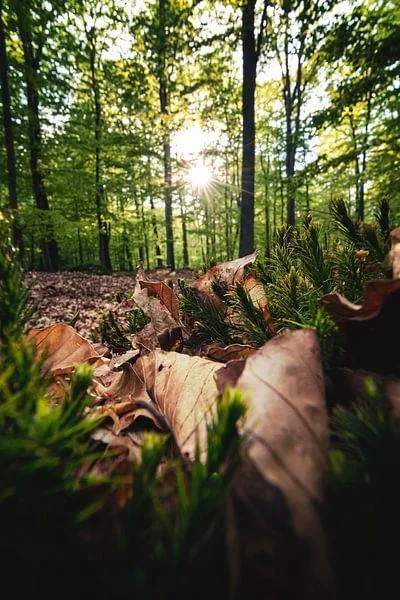
Look at the color pairs that look good no matter who uses them. Brown and green are soil and forest.
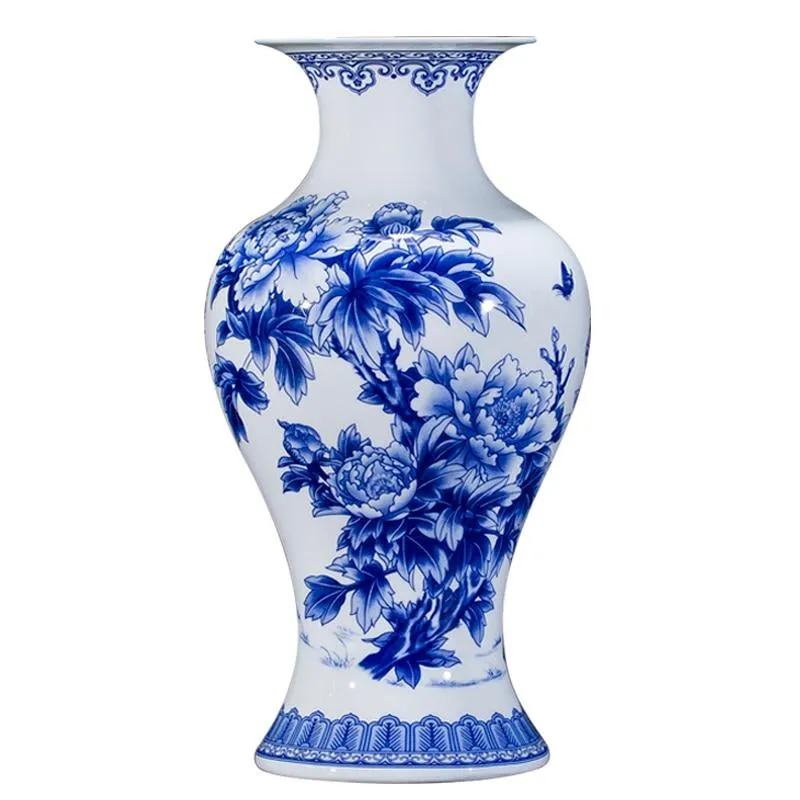
White and blue, like blue-and-white porcelain, are clouds and sky.

And yellow, orange, red and purple are the gradient of the evening sun. It always looks beautiful.

So where do we see lots of bright colors mixed together?
But a picture like that second version, with lots of loud colors mixed together, is something we almost never see in nature (except maybe a tulip field).
So where do we usually see this kind of mix?
In a pile of garbage, full of plastic in every color.

Maybe that’s what sinks deep into our subconscious: that colors like these are ugly and tasteless.
But was this taste always there?
I don’t think so.
The first synthetic dye was only discovered in 1856, by William Henry Perkin, and, interestingly, it was purple. It was called mauveine.2 Before synthetic colors, the choice of colors was very limited. They had to be extracted from plants, minerals or animals.
So people in the past were crazy about bright colors. Some colors were so rare that only the upper class was allowed to wear them, like purple, which in ancient times was extracted from sea snails and became the color of kings and emperors.3
If people back then had seen a pile of brightly colored garbage like this, they might have been stunned and seen it as something precious.
The white stone statues were once colored
Another example is Greek and Roman statues, which we know as plain white marble. When researchers used instruments to examine the traces of original paint that remain, they found many were once painted in loud colors,4 nothing like today’s rules for matching colors.
My conclusion
Human instinct may influence which colors we read as beautiful, but culture and our surroundings can also change that perception, at least partly. Colors we call tasteless today might, two hundred years ago, have been something everyone wanted.
So where do you think our taste in color comes from more: instinct or culture?
Footnotes
-
Wilson, E. O. (1984). Biophilia. Cambridge, MA: Harvard University Press. ↩
-
Garfield, S. (2000). Mauve: How One Man Invented a Colour That Changed the World. London: Faber and Faber. ↩
-
Finlay, V. (2002). Colour: Travels Through the Paintbox. London: Sceptre. (Chapter on purple.) ↩
-
Brinkmann, V., & Wünsche, R. (Eds.). (2007). Gods in Color: Painted Sculpture of Classical Antiquity. Munich: Stiftung Archäologie. (Exhibition catalogue.) ↩